
Le innovazioni di imec per le memorie
-

- Tweet
- Pin It
- Condividi per email
-
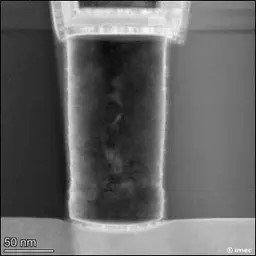
imec ha presentato due interessanti innovazioni nella ricerca sulle memorie ferroelettriche. Questo tipo di memorie sta diventando sempre più interessante dato che tecnologie convenzionali come quelle Dram e Sram sono sempre più difficili da scalare e la richiesta di memoria per applicazioni di Intelligenza Artificiale è sempre maggiore. Gli approcci ferroelettrici si stanno dimostrando candidati promettenti perché possono combinare il funzionamento a bassa tensione con una integrazione 3D più elevata.
Le innovazioni presentate sono complementari e sono relative ai condensatori ferroelettrici a bassa tensione che potrebbero supportare future memorie di tipo Dram e ai FeFet (transistor a effetto di campo ferroelettrici) impilati verticalmente che aprono la strada ad architetture di memoria compatte e ad alta densità per i sistemi di Intelligenza Artificiale di prossima generazione.
In particolare, precisa imec, i condensatori ferroelettrici dimostrano di consentire un funzionamento a bassa tensione (circa 1,3 V) grazie alla riduzione dello spessore dello strato ferroelettrico, mantenendo al contempo un’elevata polarizzazione residua (maggiore di 40 μC/cm²) e una lunga durata (maggiore o uguale a 10¹³ cicli), requisiti fondamentali per le applicazioni di memoria di tipo Dram.
L’azienda sottolinea che questi progressi giungono in un momento critico per l’industria dei semiconduttori che richiede la necessità di nuovi approcci per la memoria per poter offrire una capacità di memoria sensibilmente maggiore. Nel complesso, queste innovazioni offrono percorsi complementari per affrontare le sfide in termini di prestazioni e costi per la realizzazione dei futuri sistemi.
Contenuti correlati
-
 Imec facilita l’integrazione di chiplet III-V
Imec ha annunciato l’evoluzione della sua piattaforma a livello di sistema per l’integrazione eterogenea di chiplet III-V su Si-Cmos. Questa piattaforma combina condensatori integrati ad alta densità, un framework di modellazione scalabile per componenti passivi e la...
-
 Nuova tecnologia produttiva da imec e EVG
All’Ieee Electronic Components and Technology Conference (Ectc) 2026, imec ed EV Group (EVG) hanno presentato una tecnologia di bonding ibrido wafer-to-wafer ad alta resa con passo dei pad di interconnessione in rame di 200 nm. Zsolt Tokei,...
-
 IC-Link by imec entra in Tsmc OIP
IC-Link by imec, fornitore di servizi di progettazione e produzione di Asic e fotonica al silicio, è entrato a far parte della Tsmc Open Innovation Platform (OIP) 3DFabric Alliance. Grazie a questa partnership, IC-Link potenzierà le proprie...
-
 Imec e Cadence collaborano per il tape-out del primo chip di test a 3nm
imec, il centro di ricerca e innovazione leader a livello mondiale nel settore della nanoelettronica e delle tecnologie digitali, e Cadence Design Systems hanno annunciato che la loro lunga e consolidata collaborazione ha portato al primo tape-out...
-
 7 fellows & 7 thoughts about Moore’s Law – ‘Moore’s Law is primarily an economic law, but given some expansion it can also be applied to thin-film electronics’
Most people know Moore’s Law as ‘the number of transistors on a chip doubles every two years’. That interpretation was the consequence of economic considerations. Moore predicted that ‘the number of transistors on a chip will rise...
-
 7 fellows & 7 thoughts about Moore’s Law – ‘Ten years from now, CMOS will seem as old-fashioned as vacuum tubes’
I’m very optimistic about the continuation of Moore’s Law. But in saying that, I’m speaking about Moore’s Law purely as an economic law. I believe we’ll be able to offer increasing amounts of functionality at lower and...
-
 7 fellows & 7 thoughts about Moore’s Law – “The Internet of Power also benefits from Moore’s Law”
It may sound strange, but striving to achieve smaller dimensions with Moore’s Law is an important enabler for producing increasingly better solar cells, with a more elaborate technology toolbox (including ALD, epitaxy, etc.). Improved process steps are...
-
 7 fellows & 7 thoughts about Moore’s Law – “We must teach chips to feel pain”
When I was a doctorate student in the 1980s there was lots of wild speculation about Moore’s Law: give it another 10 years and transistors will stop getting smaller, they were saying back then. But in the...
-
 7 fellows & 7 thoughts about Moore’s Law – “Wearable sensors also benefit from scaling according to Moore’s Law”
My particular area of research has nothing to do directly with Moore’s Law and advanced chip technologies. We currently use 180-nanometer technology for our health sensors. So, at first sight, you could say that in technology terms,...
-
 7 fellows & 7 thoughts about Moore’s Law – “Moore’s Law will continue for a long time yet, but we will have to scale in a more ‘specialized’ way”
Moore’s Law is not a law of dimensions, but of economics. The law states that electronic systems will become increasingly smaller and increasingly cheaper and/or acquire more functions. The best example of this is our smartphone. In...
Scopri le novità scelte per te
-
Imec facilita l’integrazione di chiplet III-V
Imec ha annunciato l’evoluzione della sua piattaforma a livello di sistema per l’integrazione eterogenea di chiplet III-V...
-
Nuova tecnologia produttiva da imec e EVG
All’Ieee Electronic Components and Technology Conference (Ectc) 2026, imec ed EV Group (EVG) hanno presentato una tecnologia...

News/Analysis Tutti ▶
-
 Le innovazioni di imec per le memorie
imec ha presentato due interessanti innovazioni nella ricerca sulle memorie ferroelettriche. Questo tipo di...
-
 Yole Group analizza la crescita del mercato SiC
Yole Group ha recentemente rilasciato il report “Power SiC 2026 – Markets & Applications“,...
-
 Nuova certificazione per Rohde & Schwarz
Rohde & Schwarz ha comunicato che la sua soluzione di test Hybrid eCall e...
Products Tutti ▶
-
 Nove Mosfet di potenza da Toshiba
Toshiba ha aggiunto alla sua offerta di Mosfet di potenza nove dispositivi disponibili in...
-
 Rohm amplia l’offerta di Mosfet per automotive
Sono destinati ai sistemi di alimentazione in ambito automotive i nuovi Mosfet della serie...
-
 Due serie di convertitori da 6 W da Recom
Recom ha introdotto due serie convertitori CC/CC regolati da 6 W utilizzabili per applicazioni...

