Embedded computer market
Interview with Scott Aylor, AMD embedded solutions general manager and vice president
-

- Tweet
- Pin It
- Condividi per email
-

The embedded computer market is growing rapidly while at the same time undergoing profound changes. AMD is responding to these market needs with a dual strategy for embedded customers: AMD is offering the freedom to choose between and/or combine ARM or x86 processors. AMD is the first semiconductor company in the world to make such a commitment.
As a part of this dual strategy, AMD has announced plans to extend its already-successful Embedded G-Series and R-Series SOC and APU product lines and to deliver the next-generation embedded AMD Radeon GPU family. Scott Aylor, vice president and general manager of AMD embedded solutions, recently spoke about the upcoming campaign strategy and gave an outlook on AMD’s planned new releases in 2014.

A first look at the “Adelaar“ the first discrete AMD Embedded Radeon™ GPU for embedded systems, which is based on the AMD Graphics Core Next architecture especially developed for embedded systems
Mr. Aylor, the market for embedded systems is gigantic and it continues to grow. Which developments can we expect in this area?
SA: The embedded market consists of various segments and forms the fundamental basis for the surround computing era. The segment of intelligent embedded systems (those equipped with high-performance microprocessors, IP connectivity and high-level operating systems) is poised for experience extremely fast growth. I believe that it will soon become the most important segment within the embedded industry. According to a recent study by market researcher VDCì, the market for CPUs for traditional and intelligent embedded systems will grow by 36 percent, from around 330 million units in 2013 to more than 450 million units in 2016. Devices with x86 and ARM architectures will account for 82 percent of the total addressable market.
How well is AMD prepared for this market growth?
SA: We are very well prepared: AMD offers developers in the embedded community the solutions they need to be successful in this rapidly expanding and transforming market. We know what the market demands are and know how we have to react. This is best reflected in our embedded roadmap for this year. We’ve set a strong roadmap in motion; all developers need to do is jump on board.
What specific requirements do customers in this market have?
SA: Customer demands differ significantly depending on the market segment – from low-power to high-performance, from Linux to Windows and from x86 to ARM. With our upcoming lineup we are in a position to cover all these needs. We are the first vendor to announce our ability to provide both ARM and x86 processor solutions for low-power and high-performance embedded computing designs. According to Jim McGregor, principal analyst with TIRIAS Research, “The unprecedented rise of intelligent connected solutions over the next several years will require a myriad of ultra low-power to ultra high-performance solutions connecting devices to the cloud.” We plan to lead the industry in offering a set of solutions that are flexible, scalable and innovative.
How exactly does AMD plan to satisfy all these diverse demands?
SA: Our near-term roadmap includes two leading x86 APUs (accelerated processing units) and CPUs (central processing units), a high-performance ARM system-on-chip (SOC) and the next-generation discrete AMD Embedded Radeon GPUs (graphics processing units). This range extension offers the embedded developer community a much wider choice and, in so doing, helps them meet design requirements in a more exact way.
With a view to these upcoming developments, where do your products offer advantages over existing platforms in the market?
SA: With our ARM and x86 architectures we can realize corporate visions of developing an ambidextrous ecosystem. This wide solution range for embedded design developers is supported by our embedded longevity program for supply stability assurance to fit their every need.
What specific technical areas has AMD been focused on for the new products?
SA: The upcoming roadmap has been designed towards improving two ratios: performance-per-watt and performance-per-euro. Together with the recent launch of the prize-winning AMD Embedded G-Series SOC family, which sets a new benchmark in terms of performance-per-watt of low-power multi-core APUs, our latest additions to the roadmap for embedded products represent a further significant strategic push for AMD in the high-growth embedded market.
There has been much speculation about AMD’s upcoming embedded ARM products. Can you give us some more information?
SA: We are building out plans to launch the “Hierofalcon” processor family, which is based on ARM Cortex A57 architecture. Hierofalcon is a real milestone, as it will be AMD’s first 64-bit ARM-based embedded platform which serves datacenter, communications infrastructure, and industrial applications.
Can you divulge any further details?
SA: The “Hierofalcon” platform will integrate up to eight ARM Cortex A57 CPUs with an expected clock rate of up to 2.0GHz and a high-performance memory with two 64-bit DDR3/4 channels with error-correcting code for high-availability applications. The highly integrated system-on-chip further offers 10GB KR Ethernet and third-generation PCI Express for high-speed network connectivity, making it ideal for control-level applications. This extension to the embedded roadmap offers developers of high-performance embedded systems a solution which may have significant cost savings, both in terms of power consumption as well as system costs.
Security surely plays a major role here?
SA: Yes, of course. The need for networked, secure systems has really come into the forefront. With ARM TrustZone technology support and a dedicated cryptographic coprocessor for security tasks, the “Hierofalcon” will have an extremely high level of security.
By developing platforms based on ARM architecture, will AMD be neglecting the established x86 path?
SA: Certainly not. AMD continues to build on its legacy as a leading supplier of x86 solutions and we expect “Bald Eagle,” which is a x86-based, high-performance, next-generation embedded processor, and is expected to become available in the first half of this year. It will come as an APU or CPU and have up to four new “Steamroller” CPU cores with up to a 35-watt TDP. The APUs will provide the new performance-optimized GPU architecture AMD Radeon Graphics Core Next and HSA extensions for high-performance embedded applications, resulting in a superior solution for next-generation digital signage and embedded digital gaming applications. In addition, the Bald Eagle family facilitates greater design flexibility for developers. To enable this, new power management functions such as configurable TDP will be introduced.
And what are AMD’s plans for the low-power segment?
SA: We will also launch “Steppe Eagle,” which covers this segment, in the first half of this year. It will further extend the performance and low-power range of the current, award-winning AMD Embedded G-Series SOC platform with an improved “Jaguar” CPU core architecture and an AMD Graphics Core Next GPU architecture with new functions for higher CPU and GPU frequencies. The Steppe Eagle SOC was designed for low-power embedded applications and, in comparison to the current AMD Embedded G-Series SOC, offers, next to a high performance-per-watt, a low TDP and increased high-end performance above 2GHz. In addition, the Steppe Eagle SOC gives embedded development engineers the flexibility to leverage the current AMD Embedded G-Series SOC board design and software stack into numerous applications with footprint-compatibility.
Tell us about the new AMD Embedded Radeon GPUs.
SA: “Adelaar” is an embedded GPU based on AMD Graphics Core Next architecture, which was developed specifically for embedded applications. This stands out from other products in the market thanks to its multi-chip module (MCM) with prequalified and integrated 2GB graphic memory. The Adelaar GPU family offers excellent 3D graphics, multi-display support and DirectX 11.1, OpenGL 4.2 support and supports both Windows and Linux. Adelaar comes with a planned long-term availability of seven years as an MCM, a Mobile PCI Express Module (MXM) and as a standard PC graphics cardìì.
What other differentiators for AMD can you talk about?
SA: More than anything, it is paramount to make sure our customers get the right end-to-end solution for the job. So, with its current and future products, AMD is actively supplying the market for intelligent embedded devices with a comprehensive ecosystem of software and hardware partners, which support multiple operating systems, including both Windows and Linux.
What are your expectations for 2014?
SA: I think, with all these new products in the pipeline, that 2014 will be an extremely exciting year, both for our customers and for our company. The new products will target a wide range of different industries and enable our customers to develop really innovative solutions. We will especially be targeting the industries of industrial control and automation, thin clients, medical imaging, digital signage, digital gaming and digital surveillance systems. We also look forward to seeing new applications in the military, aerospace and communications infrastructure industries. We are definitely excited to show the industry AMD’s commitment to the embedded market and we are looking forward to seeing the applications that our customers develop with these products.
- Access the AMD Embedded Roadmap press kit here (English).
- Follow AMD Embedded Solutions on Twitter:@AMDEmbedded.
- For more news on AMD Embedded Solutions, visit www.amd.com/embedded.
- For more information visit: http://www.amd.com/us/press-releases/Pages/amd-details-embedded-2013sept9.aspx
Edited by the Editorial Staff
Contenuti correlati
-
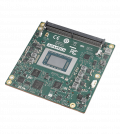 Le board di Advantech per l’Edge AI con gli AMD Ryzen AI Embedded P100
Advantech ha recentemente ampliato la sua offerta con le piattaforme MIO-5380 (single-board computer da 3,5″), SOM-6874 (computer-on-module COM Express) e AIMB-2211 (scheda madre Mini-ITX). Peculiarità di queste board è l’adozione dei processori AMD Ryzen AI Embedded serie...
-
 Collaborazione tra AMD e Bosch Rexroth per ctrlX OS
AMD e Bosch Rexroth stanno collaborando per il supporto dei processori Embedded x86 e i SoC adattivi di AMD da parte del sistema operativo aperto ctrlX OS di Bosch Rexroth. L’obiettivo è di ottimizzare il design hardware, integrandolo...
-
 Ampliamento della partnership strategica tra AMD e Meta
AMD e Meta hanno annunciato di aver ampliato la partnership strategica esistente firmando un accordo pluriennale e multigenerazionale per distribuire fino a 6 gigawatt di GPU AMD Instinct. L’azienda precisa che la prima implementazione utilizzerà una GPU...
-
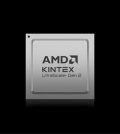 Una nuova generazione di FPGA da AMD
AMD ha presentato la famiglia Kintex UltraScale+ Gen 2. Si tratta di una nuova generazione di FPGA di fascia media che sfruttano l’esperienza del portfolio FPGA Kintex, aggiornando elementi come memoria, I/O e sicurezza per soddisfare le crescenti...
-
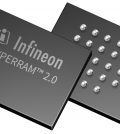 Tecnologia HYPERRAM di Infineon per il kit AMD
AMD ha testato la memoria HYPERRAM da 64 Mb e l’IP del controller HYPERRAM di Infineon Technologies per l’utilizzo con il kit di valutazione AMD Spartan UltraScale+ FPGA SCU35. L’IP del controller Infineon funge da interfaccia di...
-
 Joint venture tra AMD, Cisco e HUMAIN
Dovrebbe iniziare le operazioni nel 2026 la joint venture che AMD, Cisco e HUMAIN intendono creare con l’obiettivo di rafforzare il ruolo dell’Arabia Saudita come fornitore di soluzioni AI per clienti sia regionali sia internazionali. In particolare,...
-
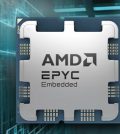 AMD annuncia i processori EPYC Embedded 4005
I nuovi processori EPYC Embedded 4005 Series presentati da AMD sono destinati principalmente alle applicazioni a bassa latenza in ambito edge, come per esempio appliance di sicurezza di rete e server edge industriali di fascia entry-level. Questi...
-
 PC AI: una svolta epocale nell’ambiente di lavoro moderno
A cura di Rahul Tikoo, SVP and GM, Client Business Unit, AMD In questa fase storica, caratterizzata dalla crescente influenza dell’intelligenza artificiale in azienda, i responsabili IT affrontano una svolta decisiva: rivalutare l’infrastruttura dei PC, adattarsi all’evoluzione...
-
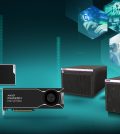 Le soluzioni Edge AI di nuova generazione di Advantech
Advantech ha presentato i suoi più recenti sistemi Edge AI della serie AIR, basati sulla gamma di soluzioni AMD. La dotazione hardware, infatti, comprende i processori AMD Ryzen serie 7000/8000 e EPYC 8004, abbinati a GPU Radeon...
-
 AMD completa l’acquisizione di ZT Systems
AMD ha annunciato il completamento dell’acquisizione di ZT Systems, operazione che consentirà all’azienda di competere maggiormente nella fornitura di soluzioni di infrastruttura per data center. Accelererà inoltre la progettazione e l’implementazione delle infrastrutture AI, basate sui suoi...
Scopri le novità scelte per te
-
Le board di Advantech per l’Edge AI con gli AMD Ryzen AI Embedded P100
Advantech ha recentemente ampliato la sua offerta con le piattaforme MIO-5380 (single-board computer da 3,5″), SOM-6874 (computer-on-module...
-
Collaborazione tra AMD e Bosch Rexroth per ctrlX OS
AMD e Bosch Rexroth stanno collaborando per il supporto dei processori Embedded x86 e i SoC adattivi...

News/Analysis Tutti ▶
-
 Nuova collaborazione tra Farnell e Hailo
Farnell ha annunciato di aver stretto una nuova partnership a livello globale con Hailo,...
-
 Consystem rinnova il sito web
Consystem rinnova la propria presenza digitale con un nuovo sito progettato per offrire una...
-
 Siemens acquisisce Precision Innovations
Siemens ha siglato un accordo per l’acquisizione di Precision Innovations, azienda specializzata in software...
Products Tutti ▶
-
 Rohm propone una nuova evaluation board
La nuova evaluation board BD83070GWL-EVK-002 di Rohm è stata sviluppata per valutare le caratteristiche...
-
 Il nuovo power analyzer di Yokogawa
Il nuovo analizzatore di potenza ad alta precisione WT1500 di Yokogawa Test & Measurement...
-
 Driver per motori passo-passo da Toshiba
Toshiba Electronics Europe ha sviluppato TB67S531FTG, un driver per motori passo-passo bipolari bifase a...