Analog vs Digital, the Power struggle continues
-

- Tweet
- Pin It
- Condividi per email
-

If you are a power supply design engineer or an EE or ASE that selects power solutions for your end system, then there is no doubt you have stood at the cross roads and pondered the dilemma to go analog or digital with your power train.
The good news is we find that the actual answer lies somewhere in the middle… borrowing the best aspects of both approaches.
Power supplies are making their way up the food chain as a primary consideration when designing a new system. Historically, a power applications engineer used to spend most of their time trying to figure out how to fit the system power in the “afterthought” mechanical space left by the design team.
Today we find system engineers depending on the power supply to do more than just provide analog world attributes of conversion, conditioning, and protection supplies are now expected to handle power management as well. System engineers want to be able to communicate with the power supply and get real time information as well as be able to control the power supply enter the digital realm.
Monitoring of real time information such as voltage levels, current levels, faults, alarms, and time based logging of that information gives a systems engineer the ability to maximize system run time through predictive failure analysis and minimize downtime by having more data to offer a repair engineer.
Controlling supply translates to being able to turn outputs on and off in a fixed sequence and timing, changing output parameters such as voltage and current, and optimizing cooling fan speeds for noise minimization and fan life.
Although the monitoring and control can be achieved through analog means, we find that going to our digital tool bag is often a more practical in terms of design, support, implementation, and long term management of the power system. When you start to consider signals and control in multiple domains such as level and time, and optimizing those domains to meet your specific needs, you can see that changing firmware is much more manageable than dialing in resistor values during initial system evolution.
Digital management literally allows for a vendor to email you a new file for upload to the monitoring and control chip to see if your new configuration works. If not, go right back to the old configuration and create another one. No change to hardware means faster integration and lower cost of integration.
The dawn of digital in power supplies initially focuses on the PWM and the main switching control of the supply. Although being able to digitally change and monitor critical core parameters of the supply seemed appealing at first, we have found that the benefits that come with a digital “heart”, in most cases, are not justified when weighed against the complications associated with a DSP design.
Analog is still king when it comes to the core power conversion it’s tried and true, trusted in the industry, more readily available, and has shorter design cycles and “bugs” when it comes to new product releases. We also want some of the benefits we discovered on our digital design journey, so we have held on to those, but on a secondary level of monitoring and control. The root alarm and control circuits are analog, but the interface to those circuits are filtered thought a digital layer that gives us the best of both worlds.
They may be a time where DSP becomes the norm, but for now, the way I see it, analog is going to be around for a while but living in harmony with the digital benefits power management systems are begging for in today’s marketplace.
Jeff Rodriguez, VP of Engineering Services, XP Power
Contenuti correlati
-
 Nuovi alimentatori wall-mount da XP Power
La serie AMF60 di XP Power è composta da alimentatori AC-DC da 60W di tipo Wall-Mount, utilizzabili per applicazioni mediche, di home healthcare e industriali. Una peculiarità di questi dispositivi è il grado di protezione IP42 per...
-
 XP Power estende l’offerta di alimentatori medicali
PGW e PGD sono due nuove serie di alimentatori AC-DC esterni da 65 W a 140 W di XP Power. Peculiarità di questi prodotti è l’utilizzo di componenti GaN che consentono di ottenere un formato compatto e...
-
 I convertitori HRF15 di XP Power diventano digitali
XP Power ha aggiunto le funzionalità di monitoraggio e controllo digitale alla sua serie di convertitori DC-DC HRF15. Questi convertitori sono dispositivi di precisione ad alta tensione da 15 W con programmazione sia della tensione che della...
-
 XP Power: convertitori ultracompatti da 40 W
XP Power ha introdotto la serie low cost BCT40T, costituita da convertitori DC-DC da 40 W ospitati in un package compatto da 1”x1” per PCB. La nuova serie è caratterizzata da una elevata densità di potenza e...
-
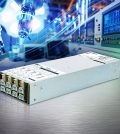 XP Power presenta gli alimentatori della serie FLXPro
XP Power ha realizzato una nuova serie di alimentatori modulari e configurabili, progettati con tecnologia SiC/GaN e un’architettura completamente digitale che ne semplifica il controllo e ne aumenta la flessibilità. La serie FLXPro può raggiungere efficienze fino...
-
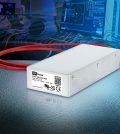 I convertitori DC-DC ad alta tensione di XP Power
I nuovi convertitori DC-DC ad alta tensione ultra-low noise di XP Power sono utilizzabili per molteplici applicazioni scientifiche sensibili al rumore. Le unità HRF15 sono convertitori in grado di fornire tensioni fino a 15 kV con un’elevata...
-
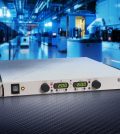 La serie di alimentatori FT di XP Power
La serie di alimentatori FT di XP Power offre modelli con tensione di uscita fino a 60 kV a 750 W con polarità sia positiva che negativa e un fattore di forma compatto. Questa gamma di prodotti...
-
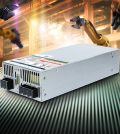 Una nuova serie di alimentatori programmabili da XP Power
La serie HDA1500 di XP Power è costituita da alimentatori AC-DC con una potenza nominale di 1.5 kW senza requisiti di carico minimo. Questa serie si contraddistingue per il controllo digitale avanzato che offre la possibilità di...
-
 XP Power presenta nuovi alimentatori low profile
La nuova gamma CCR di XP Power è composta da alimentatori AC-DC compatti e a basso profilo (25,4mm) con potenze nominali da 110W a 420W e flessibilità dal punto di vista del raffreddamento. Queste unità sono state...
-
 XP Power presenta convertitori DC-DC da 150W/200W
I convertitori DC-DC della serie RDF di XP Power offrono potenze nominali di 150W e 200W e sfruttano un sistema di raffreddamento di tipo baseplate. Questi moduli sono caratterizzati da una tensione di ingresso particolarmente ampia (nominale...
Scopri le novità scelte per te
-
Nuovi alimentatori wall-mount da XP Power
La serie AMF60 di XP Power è composta da alimentatori AC-DC da 60W di tipo Wall-Mount, utilizzabili...
-
XP Power estende l’offerta di alimentatori medicali
PGW e PGD sono due nuove serie di alimentatori AC-DC esterni da 65 W a 140 W...

News/Analysis Tutti ▶
-
 Cosmic Semiconductor Solutions a Pcim Europe 2026
Cosmic parteciperà per la prima volta a Pcim Europe 2026, evento che si terrà a...
-
 29 premi per DigiKey
In occasione dell’EDS Leadership Summit 2026, evento tenutosi dal 18 al 22 maggio a...
-
 Le previsioni di Wsts sui semiconduttori per il 2026
L’organizzazione World Semiconductor Trade Statistics (Wsts) ha rivisto sensibilmente al rialzo le sue previsioni...
Products Tutti ▶
-
 Soluzione di conformità ASA-ML da Rohde & Schwarz
Rohde & Schwarz ha presentato una nuova soluzione di conformità ASA Motion Link per...
-
 Emerson amplia la gamma NI PXI
Le più recenti aggiunte al portafoglio VST (Vector Signal Transceiver) NI PXI di Emerson...
-
 Microchip presenta una serie di DSC essenziali
Microchip Technology ha introdotto una nuova famiglia di Digital Signal Controller (DSC) che permette...